
Age-restricted? YouTube often blocks those trailers inside other sites. Use the button to watch on YouTube — you may need to sign in and confirm your age.
Watch on YouTubeTrailer from TMDb metadata; playback via YouTube. If the player shows a restriction, use "Watch on YouTube" above.
Community reviews
From TMDb members · 2 total- Peter89Spencer4/10
I take it there isn't going to be a series 2(?) Bram Stoker would be spinning in his grave. Or coffin. But at least I watched it all and got it over and done with!
- Stephen Campbell8/10
**_A sarcastic posthumanist Dracula won't be to everyone's taste, but I thoroughly enjoyed this unique take on the Count_** > _His character was dreadfully vicious, for that the possession of irresistible powers of seduction, rendered his licentious habits more dangerous to so…
Full text & links on TMDb in the reviews section below.
Rent, buy & download
Official stores and apps (Apple TV, Prime Video, Google Play, and others) let you rent or buy this title; many include offline downloads inside their app after purchase.
Stores (rent / buy)
 Amazon Video
 Apple TV Store
 Google Play Movies
 Fandango At Home
Also on subscription
 Netflix
 Netflix Standard with Ads
Showing availability for region US. Opens The Movie Database / partner listings — not affiliated withWatchMind.
Dracula
“Bloody legend.”
70%
Series
1
3
AI Analysis
Dracula (2020) — AI TV series analysis
WatchMind AI generated this AI analysis of Dracula (2020) — a TV series tagged as Drama and Action & Adventure with balanced tone moods and fast-paced pacing.
Story & themes: Transylvania, 1897. The blood-drinking Count Dracula is drawing his plans against Victorian London. And be warned: the dead travel fast. Our models also surface themes such as ai and war from synopsis and genre signals.
Watch context: Best suited for general audiences. Expect fast-paced storytelling across 1 season.
Community signal: TMDb members rate Dracula 70% (816 votes) — solid community ratings for this TV series.
AI verdict
Dracula is a series worth prioritising when you want something with solid community ratings — our AI analysis flags it as a strong match for its genre and tone profile.
Preview on this device: 30% match — Matches your drama. Sign in to save your profile across devices.
Algorithmic AI analysis from genres, synopsis, pacing heuristics, and TMDb community scores — not a generative chatbot. How WatchMind works.
Insights
Audience & engagement
How WatchMind visitors interact with this title — views, saves, sentiment, and taste match when you're signed in, or a device preview while browsing. Aggregates are anonymous; last 30 days.
Early data — charts fill in as more people explore this title.
TMDb audience score
70%
from 816 TMDb votes
Taste match (this device)
30%match
Preview from browsing on this browser — not saved to an account yet.
Matches your drama
Sign in to save your profile →- Your rating—
- Watch queueNot saved
WatchMind sentiment
No thumbs or dismissals yet. Rate this title to help others see likeness trends.
- Dismissals
- 0
Engagement breakdown
0 unique visitors · no audience notes yet
Views trend (14 days)
Daily title page views on WatchMind
Synopsis
Transylvania, 1897. The blood-drinking Count Dracula is drawing his plans against Victorian London. And be warned: the dead travel fast.
Quick facts
- Type
- Series
- Status
- Ended
- Release date
- 2020-01-01
- Seasons
- 1
- Episodes
- 3
- TMDB rating
- 7.0
- TMDB ID
- 86850
Watch & discovery tips
- Read TMDb member reviews in the reviews section, and audience tips from other WatchMind visitors in Audience notes.
- Use Rent, buy & download for official stores; offline viewing is usually inside their apps.
- Browse trending and top-rated series from the main TV page.
- Add titles to your watch queue from this page — order matters; the top pick can surface on your home page when you're logged into the same browser session.
Frequently asked questions
Where can I watch Dracula (2020)?
Dracula is available for discovery on WatchMind. You can find official links to rent, buy, or stream from licensed digital stores like Apple TV and Amazon in our "Where to Watch" section.
Is there an official trailer for Dracula?
Yes, you can watch the official trailer for Dracula directly on this page. We pull the latest video metadata from TMDb and play it via YouTube integration.
What is Dracula about?
Transylvania, 1897. The blood-drinking Count Dracula is drawing his plans against Victorian London. And be warned: the dead travel fast.
Is there an AI analysis for Dracula?
Yes. WatchMind publishes an AI analysis on this page — tone, pacing, audience fit, and community scores from TMDb metadata and recommendation models (not a chatbot). Scroll to the AI Analysis section or read the meta description summary.
How many seasons of Dracula are there?
There are currently 1 seasons of Dracula documented in the community database.
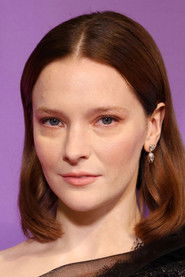
Cast & crew
Names and photos from The Movie Database (TMDb). Follow links on themoviedb.org for full filmographies.

Audience notes
Quick tips, watch-order ideas, and “worth it?” takes from other WatchMind visitors — not from TMDb. Reply to continue a thread, tap Helpful to surface useful notes, and keep things kind — no spoilers in the first line when you can help it.
Discussion0 notes
No notes yet — be the first to leave a suggestion for the next viewer.
Community reviews
Written by TMDb members — same catalogue as our movie & TV metadata. API terms
I take it there isn't going to be a series 2(?) Bram Stoker would be spinning in his grave. Or coffin. But at least I watched it all and got it over and done with!
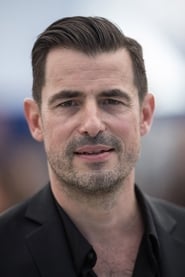
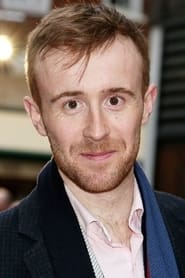
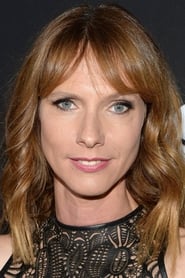
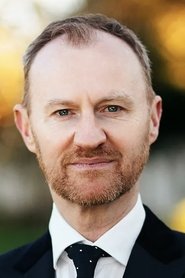
**_A sarcastic posthumanist Dracula won't be to everyone's taste, but I thoroughly enjoyed this unique take on the Count_** > _His character was dreadfully vicious, for that the possession of irresistible powers of seduction, rendered his licentious habits more dangerous to society._ - John William Polidori; "The Vampyre; A Tale" (1819) > _How blessed are some people, whose lives have no fears, no dreads; to whom sleep is a blessing that comes nightly, and brings nothing but sweet dreams._ - Bram Stoker; _Dracula_ (1897) > _Stoker reveals that Dracula is primarily a sexual threa__t, a missionary of desire whose only true kingdom will be the human body. Although he flaunts his independence of social restraints and proclaims himself a master over all he sees, Dracula adheres more closely to English law than his opponents in every area except his sexual behaviour. Neither a thief, rapist, nor an overtly political threat, Dracula is dangerous because he expresses his contempt for authority in the most individualistic of ways – through his sexuality. In fact, his thirst for blood and the manner in which he satisfies this thirst can be interpreted as sexual desire which fails to observe any of society's attempts to control it – prohibitions against polygamy, promiscuity, and homosexuality._ - Carol A. Senf; _The Vampire in Nineteenth Century English Literature_ (1988) Bram Stoker's 1897 novel _Dracula_ is a straightforward adventure story. It's also a metaphorical examination of the Great Famine. And a critique of patriarchal hegemony. And a Christian allegory. And an examination of the ramifications for Transylvania of the Russo-Turkish War. And a study of the clash between modern science and ancient tradition. And a depiction of mental illness. And a love letter to Henry Irving. It's also none of these things. Thematically protean, the novel has been read from the perspective of a range of critical theories, with the resultant interpretations often reflecting the socio-political issues of the day. So, for example, feminist theory has argued that the novel is a depiction (some say celebration, some say condemnation) of a patriarchal misogynistic rape fantasy in which women are punished for any steps they take towards sexual liberation (seen most clearly in the character of Lucy Westenra); Marxist theory reads it as a critique of evil capitalism draining the life blood of the proletariat; post-colonial scholars suggest it's about fear of the Other, especially the proliferation of eastern Europeans immigrating into western European countries; psychoanalyst have found it to be a story of suppressed (homo)sexual desire; New Historicists have suggested it's an expose of the conservative and repressive ideology of Victorian England; queer theorists read it as dealing with STIs. And so too with the many (over 350) adaptations of the novel for the screen (big and small). So you have, for example, Tod Browning's _Dracula_ (1931), which turns the count into an elegant aristocrat analogous to the various monarchs in power across Europe at the time; or the nine Hammer Horror films from 1958-1974, which are at least partially structured around simple Cold War good/bad-west/east dichotomy politics; or Francis Ford Coppola's _Bram Stocker's Dracula_ (1992), which was made at a time when the media were in the habit of making superstars of criminals, and very much leans into the idea of the seductive power of evil, the problematic notion that evil can be attractive. And now we have this latest BBC adaptation, created by Mark Gatiss and Steven Moffat (the duo behind the hugely popular _Sherlock_ series). Running a hefty 270 minutes (divided into three episodes of 90 minutes each), the series seeks to capture the tone of the original novel, if not necessarily the plot, whilst also attempting to rescue vampires from the angst-ridden millennial post-_Twilight_ position in which they find themselves. Extremely funny in places, extremely disturbing in others, this is probably the best small screen adaptation since Philip Saville's superb _Count Dracula_ (1979). There are some problems, and fans of the novel have taken especial (and not entirely unjustified) umbrage with the unexpected narrative shift in the last episode, but all in all, helped in no small part by an immense central performance, I thoroughly enjoyed this version. Hungry, 1897; Jonathan Harker (John Heffernan), an English lawyer sent to Transylvania some months prior to complete a property transfer, has become a shell of a man. Physically deformed and mentally fragile, he is staying at a small convent, where he lives in mortal fear of "the Count". Having written an account of his experiences, Harker is being interviewed by the acerbic Sister Agatha (a superb Dolly Wells), who is hoping he can fill in some of the details he left absent from his document. And so he tells her the story of how he came to Transylvania to meet the elderly Dracula (an exceptional Claes Bang having the time of his life), and the subsequent horrors he experienced, all the while lamenting that he'll never see his beloved Mina (Morfydd Clark) again. As this brief outline (which covers only the opening half-hour or so of the first episode) indicates, although the characters, locations, concepts, and beats are generally taken verbatim from Stoker, the actual narrative itself is not, with Gatiss and Moffat's deviations from the source material becoming more pronounced with each episode. Whereas the novel begins just before Harker arrives at Castle Dracula, the show begins with him already in a nunnery in Hungry, having fled the castle, and the novel's multi-perspective epistolary narrative is replaced (in the first episode anyway) with a more basic single-character flashback-style narration. Opening this way is a wise move, as it alerts the audience immediately that this isn't a 1:1 adaptation. Unfortunately, because the show deviates so much from the novel, and because the third episode is so unexpected and unique, discussing much about the overarching narrative design lends itself to spoilers. Indeed, the same could also be said of the aesthetics, with each episode looking and feeling substantially different from the other two, but in such a way that to go into detail would spoil the nature of the final episode. In any case, the first episode, directed by Jonny Campbell and shot by Tony Slater-Ling, is your basic gothic horror full of deep shadows, huge towers, labyrinthine interiors, and ominous opulence; the second, directed by Damon Thomas and shot by Julian Court, is a ship-based murder-mystery along the lines of _Murder on the Orient Express_ (except, of course, we all know who the killer is from the start), and aesthetically, it bears more than a passing resemblance to classic pirate movies; and the third, directed by Paul McGuigan and also shot by Slater-Ling, is a gaudy, postmodernist-infused examination of youthful vapidity, corporate greed, decadence for decadence sake, and the all-conquering power of superficiality. The production design across all three episodes is by Arwel Jones, and is simply stunning; from the twisting staircases and dead-end tunnels of Castle Dracula to the weather-beaten _Demeter_ (the doomed ship in the second episode) to Dracula's quite stunning residence in the third episode, everything on screen seems completely real and the world feels legitimately lived in. Costume designer Sarah Arthur also deserves praise, especially for her work in the first episode, where Harker's disintegrating mental and physical state is matched by his increasingly shabby clothing. And there are some really extraordinary visual moments here. A close-up of a fly crawling on an eyeball, for example, which then crawls _behind_ the eyeball is particularly disturbing (indeed flies are a recurring visual motif throughout the show), as is a scene where Dracula quite literally climbs out of a wolf (shot practically on set without any CGI). The exterior shots of Castle Dracula are also amazing, and why wouldn't they be as the show uses the incredible Orava Castle in Slovakia, which was also used for F.W. Murnau's _Nosferatu, eine Symphonie des Grauens_ (1922). A low-key scene in the third episode is also brilliantly staged, as Dracula explains to a companion why it is she can hear "voices" coming from graves. The acting is also terrific, particularly Bang and Wells, who both get to have tremendous fun; Bang as the sarcastic Count and Wells as perhaps the most irreverent nun ever committed to screen. Much of the strength of their performances comes in how well they handle the incredibly dry humour, of which there is a surprising amount (although Bang can also be truly terrifying when necessary). So, for example, when Harker says he resolved to kill Dracula, the following exchange takes place between himself and Agatha: > **Agatha**: _Not an easy task in the circumstances._ > **Harker**: _No, but I had certain advantages._ > **Agatha**: _I should be fascinated to know what they were._ > **Harker**: _I was enfeebled and trapped, so Dracula did not consider me a threat._ > **Agatha**: _That's true, yes. But, on the negative side, you were enfeebled and trapped._ This last line is delivered in as deadpan a manner as you could imagine. Another example is when she is speaking of her relationship with God and says, "_Like many women my age I am trapped in a loveless marriage, maintaining appearances for the sake of a roof over my head._" However, easily her funniest line is when the convent is surrounded by hundreds of bats, and Agatha is asked "_why would the forces of darkness wish to attack a convent_", to which she replies (again, completely deadpan), "_perhaps they're sensitive to criticism._" Dracula also gets in on the comedy. Explaining to Harker how he has had artists paint the sun for him, he then says, "_And Mozart wrote such a pretty little tune_", before mumbling to himself, "_I really should have spared him_". The nonchalant way Bang delivers the line is hilarious, as if it's only just occurred to him (not to mention that it ties into real-world speculation about what actually killed Mozart). Later on, he points out, "_I'm undead – I'm not unreasonable_". As the show goes on, Bang gets to show more of his range, bringing out not just Dracula's confidence and sarcasm, but so too his pride, frustration, boredom, and fears, culminating in an exceptional final scene, with Bang doing some truly wonderful silent acting. Thematically, much of the first episode is spent examining religion, primarily from Agatha's bitter and jaded perspective. So, for example, we have lines such as "_God doesn't care_", "_dreams are a haven where we can sin without consequence_", and "_faith is a sleeping draft for children and simpletons._" At the same time, the show deconstructs much traditional vampire lore, particularly the power of crucifixes. Exactly why Dracula would fear the cross when he doesn't believe in God is a theme that spans all three episodes. Along the same lines, Dracula's immortality is examined in light of the boredom that it must entail and the irony of how a creature of death can't know death itself ("_in a world of travelled roads, death is the last unprinted snow_"). Similar deconstruction of Dracula's need for blood sees it presented more like an addiction than a necessity (although certainly not to the extent of something like Abel Ferrara's _The Addiction_). And, of course, as in so many vampire movies, the show examines the idea that evil can be seductive, suggesting that if evil is sexy and alluring, if it's attractive, it can be difficult to resist. As for problems, many viewers despised the last episode, and I can see why (although I loved it), as it takes things in a wholly new, totally unexpected direction that asks more than a little leap of faith from the audience. Certainly, if the first two episodes form a broadly coherent unit, the third disrupts everything, and is thematically, aesthetically, and tonally divorced from its predecessors. Some of the humour in this episode also pushes things a little too far, with one joke in particular crossing the line into farce. I'm also not sure the show needed to be as long as it is; three 60 minute episodes probably would have sufficed. That aside though, I loved this adaptation. Purists' disdain for it is understandable, but to my mind, it captures much of the tonal qualities of the original very well. Much like Coppola's version, it deviates wildly from the book but is made by people who are clearly familiar with the source and respectful of its mythology. Featuring a suitably posthumanist Dracula for our jaded times, Gatiss and Moffat may not have pleased traditionalists, but this is a very fine attempt to bring Dracula into the 21st century without ever losing sight of his origins and _raison d'être_.

More to explore
Hand-picked from TMDb similar and recommended lists for Dracula. Each link opens a full WatchMind page with synopsis, trailer, community reviews, and official store links—so you can compare tone and audience overlap before you pick what to watch next.
Dynasty: The Murdochs
Documentary
Count My Lies
Drama · Mystery
11.22.63
Drama · Sci-Fi & Fantasy
Scooby-Doo! and the Legend of the Vampire
Animation · Comedy
The Stars and the Moon are Holes in the Sky
Drama
Akogare no Sakka wa Ningen ja Arimasen Deshita
Mystery · Sci-Fi & Fantasy
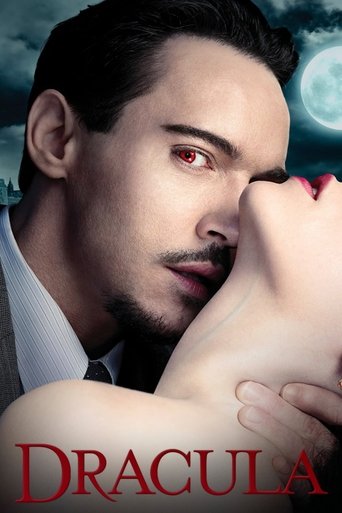
Dracula
Drama
Salem's Lot
Drama · Mystery
Killing Eve
Crime · Drama
Penny Dreadful
Action & Adventure · Drama
Van Helsing
Action & Adventure · Mystery
The Essex Serpent
Drama