
Age-restricted? YouTube often blocks those trailers inside other sites. Use the button to watch on YouTube — you may need to sign in and confirm your age.
Watch on YouTubeTrailer from TMDb metadata; playback via YouTube. If the player shows a restriction, use "Watch on YouTube" above.
Community reviews
From TMDb members · 3 total- Stephen Campbell7/10
**_Old-fashioned filmmaking with a progressive theme_** > _She looked at me and the expression on her face was an expression of dislike, one I hadn't seen before but knew right away. Later I would see it turned toward other people. But the first time was looking at me and was…
- 5rJoud5/10
**Warning: Gyllenhaal is not the lead here** We see a boring family break apart from the perspective of the young boy. End of story. Safe to say there is no story, but there could easily have been one. Clearly the father is the most interesting character in "Wildlife". Being f…
Full text & links on TMDb in the reviews section below.
Your rating
Where to stream
Region US. Update where you watch
Subscription streaming


Opens partner listings via The Movie Database — not affiliated with WatchMind.
Wildlife
66%
Movie
1h 45m
AI Analysis
Wildlife (2018) — AI movie analysis
WatchMind AI generated this AI analysis of Wildlife (2018) — a movie tagged as Drama with balanced tone moods and fast-paced pacing.
Story & themes: 14-year-old Joe is the only child of Jeanette and Jerry — a housewife and a golf pro — in a small town in 1960s Montana. Nearby, an uncontrolled forest fire rages close to the Canadian border, and when Jerry loses his job (and his sense of purpose) he decides to join the cause of fighting the fire, leaving his wife … Our models also surface themes such as identity, conflict, and relationships from synopsis and genre signals.
Watch context: Best suited for general audiences. Expect fast-paced storytelling (~105 min).
Community signal: TMDb members rate Wildlife 66% (778 votes) — solid community ratings for this movie.
AI verdict
Use this AI analysis as a quick read on Wildlife before you watch — trailer, TMDb reviews, and licensed streaming links on this page help you decide.
Algorithmic AI analysis from genres, synopsis, pacing heuristics, and TMDb community scores — not a generative chatbot. How WatchMind works.
Insights
Audience & engagement
How WatchMind visitors interact with this title — views, saves, sentiment, and taste match when you're signed in, or a device preview while browsing. Aggregates are anonymous; last 30 days.
Early data — charts fill in as more people explore this title.
TMDb audience score
66%
from 778 TMDb votes
WatchMind sentiment
No thumbs or dismissals yet. Rate this title to help others see likeness trends.
- Dismissals
- 0
Engagement breakdown
0 unique visitors · no audience notes yet
Views trend (14 days)
Daily title page views on WatchMind
Synopsis
14-year-old Joe is the only child of Jeanette and Jerry — a housewife and a golf pro — in a small town in 1960s Montana. Nearby, an uncontrolled forest fire rages close to the Canadian border, and when Jerry loses his job (and his sense of purpose) he decides to join the cause of fighting the fire, leaving his wife and son to fend for themselves.
Quick facts
- Type
- Movie
- Status
- Released
- Release date
- 2018-09-23
- Runtime
- 1h 45m
- TMDB rating
- 6.6
- TMDB ID
- 417812
Watch & discovery tips
- Read TMDb member reviews in the reviews section, and audience tips from other WatchMind visitors in Audience notes.
- Use Rent, buy & download for official stores; offline viewing is usually inside their apps.
- Browse trending and top-rated movies from the main Movies page.
- Add titles to your watch queue from this page — order matters; the top pick can surface on your home page when you're logged into the same browser session.
Frequently asked questions
Where can I watch Wildlife (2018)?
Wildlife is available for discovery on WatchMind. You can find official links to rent, buy, or stream from licensed digital stores like Apple TV and Amazon in our "Where to Watch" section.
Is there an official trailer for Wildlife?
Yes, you can watch the official trailer for Wildlife directly on this page. We pull the latest video metadata from TMDb and play it via YouTube integration.
What is Wildlife about?
14-year-old Joe is the only child of Jeanette and Jerry — a housewife and a golf pro — in a small town in 1960s Montana. Nearby, an uncontrolled forest fire rages close to the Canadian border, and ... This is the official synopsis available via TMDb community metadata.
Is there an AI analysis for Wildlife?
Yes. WatchMind publishes an AI analysis on this page — tone, pacing, audience fit, and community scores from TMDb metadata and recommendation models (not a chatbot). Scroll to the AI Analysis section or read the meta description summary.
How long is the movie Wildlife?
The official runtime for Wildlife is approximately 105 minutes.
Cast & crew
Names and photos from The Movie Database (TMDb). Follow links on themoviedb.org for full filmographies.
Directors & writers


Cast
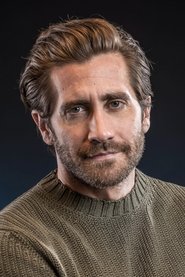
Jake Gyllenhaal
Jerry Brinson

Carey Mulligan
Jeanette Brinson

Ed Oxenbould
Joe Brinson

Zoe Colletti
Ruth-Ann
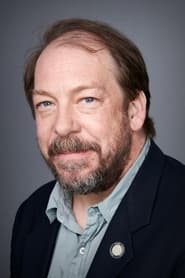
Bill Camp
Warren Miller
Travis W Bruyer
Forester
- T
Tom Huston Orr
Mr. Cartwright

Darryl Cox
Clarence Snow

Ginger Gilmartin
Receptionist

Michael Gibbons
Coach

Mollie Milligan
Esther

John Walpole
Photographer
J. Alan Davidson
Teacher
- J
Jennifer Rogers
Female Employee
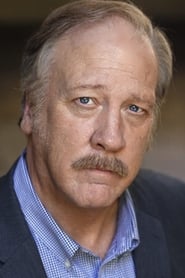
Richard L. Olsen
Older Policeman

Lexi Anastasia
Lady (uncredited)

Avery Bagenstos
Football Player (uncredited)

Kaye Brownlee-France
Grocery Store Customer (uncredited)
Audience notes
Quick tips, watch-order ideas, and “worth it?” takes from other WatchMind visitors — not from TMDb. Reply to continue a thread, tap Helpful to surface useful notes, and keep things kind — no spoilers in the first line when you can help it.
Discussion0 notes
No notes yet — be the first to leave a suggestion for the next viewer.
Community reviews
Written by TMDb members — same catalogue as our movie & TV metadata. API terms
**_Old-fashioned filmmaking with a progressive theme_** > _She looked at me and the expression on her face was an expression of dislike, one I hadn't seen before but knew right away. Later I would see it turned toward other people. But the first time was looking at me and was because she believed she'd done all she could that was correct and the best thing, and it had only gotten her stuck with me. And I couldn't do anything that mattered. Though if I could I would've had my father be there, or Warren Miller, or somebody who had the right words that would take the place of hers, anybody she_ _could speak to without just hearing her own voice in a room and having to go about the trouble of pretending she did not feel absolutely alone._ - Richard Ford; _Wildlife_ (1990) The directorial debut of actor Paul Dano, _Wildlife_ is based on the 1990 novel by Richard Ford, and is written for the screen by Dano and his girlfriend Zoe Kazan (with Dano also serving as producer, and Kazan as executive producer). Looking at the implosion of a family from the perspective of a 14-year-old member of said family, the film is thematically similar to Sam Mendes's _Revolutionary Road_ (it's at least partly about a couple falling out of love, and a marriage disintegrating), tonally similar to Derek Cianfrance's _Blue Valentine_ (a non-judgmental and regretful feeling pervades, with the film unwilling to cast either party as the villain), and aesthetically similar to the Texas scenes in Terrence Malick's _The Tree of Life_ (the period detail drips off the screen, whilst the use of a child as the focaliser colours much of what's depicted). And although _Wildlife_ is a piece of remarkably nostalgic filmmaking, at the same time, it tells somewhat of a progressive story. Subtly depicting an Americana on the cusp of massive social upheaval, the film demonstrates the uncertainty with which second-wave feminism manifested itself at a grassroots level prior to really taking off in 1963. Although it's essentially a character study, the film also suggests the 1950s-style clean-cut, neatly trimmed, rigidly defined way of life, built around the perfect nuclear family wherein a wife must be subservient to her husband, is about to become a thing of the past. Understated, restrained, narratively precise, but still granting the characters room to breathe, the film is emotional without being melodramatic, encouraging empathy without manipulating the audience. It does run the risk of seeming insurmountably old-fashioned to today's superhero-obsessed cinema goers, but, nevertheless, this is an accomplished piece of work for a first time director, suggesting Dano has been paying attention whilst working with auteurs such as Paul Thomas Anderson, Denis Villeneuve, Paolo Sorrentino, and Bong Joon-ho. Set in Great Falls, Montana in 1960, the film tells the story of the peripatetic Brinson family; father Jerry (Jake Gyllenhaal), mother Jeannette (Carey Mulligan), and 14-year-old son Joe (Ed Oxenbould). Having moved to Montana due to financial problems, the family again finds itself in trouble when Jerry is fired from his job at a country club. Although the club asks him to return soon thereafter, his pride won't allow him, and he instead takes a position fighting a forest fire near the Canadian border for a dollar-an-hour. Meanwhile, Jeannette gets work as a swimming instructor, and Joe begins working part-time in a portrait photo parlour. When Jerry leaves to go north, Jeanette accuses him of abandoning the family, and, overnight, her behaviour changes dramatically; she starts to dress differently, to wear her hair differently, to speak differently, to cease doing housework, to talk ill of Jerry in front of Joe, etc. Striking up a friendship with one of her swimming students, Warren Miller (a superb Bill Camp), a wealthy World War II vet with a car dealership, who is clearly romantically interested in her despite the difference in their ages, Jeanette soon stops even trying to hide from Joe the fact that she is extremely unhappy with Jerry, and there may be no way to repair the damage. Nestled behind that simple narrative are the fledgling social upheavals, still very much in their infancy, that would characterise the duration of the 1960s, particularly the notions of what a woman's role should be in the home and the very definition of family itself. Initially, Jeanette is depicted as a quintessential 1950s wife and mother, almost to the point of cliché; she cooks, cleans, washes the clothes, does the dishes, sees that Joe attend to his homework, and when Jerry loses his job, it is Jeanette who goes out looking for work for both of them. She knows that her (unspoken and unacknowledged) role in this patriarchal society is to hold the family together, and it's a role that is nothing like she thought it would be when she was younger. Although she and Jerry seem to love one another, or they certainly used to, she clearly feels trapped by her domestic situation, so when Jerry takes off in a misguided attempt to reaffirm his masculinity by fighting a forest fire, something in Jeanette either snaps, or clicks into place, depending on your perspective. However, although Jeanette may know she no longer wants to be a housewife, she has no idea what she does want, and her attempts to find out form the bulk of the narrative's conflict. Set three years prior to Betty Friedan's ground-breaking _The Feminine Mystique_ (1963), which redefined the parameters of all gender-based topics, depicting a society in which women were not content to do their husband's bidding, raise children, and stay quiet, Jeanette's story could very well have formed the template for Friedan's analysis. Suffocated by her current situation, she sees little hope of escape, until she realises the opportunity that Jerry leaving has presented to her. I've seen several reviewers criticise the fact Jeanette goes from dutiful mother and loyal wife to a no-longer-maternal and possible adulteress literally overnight. However, for me, the fact that the transformation happens so quickly is exactly the point; when she goes to bed, she's a wife and mother, trapped in her domestic environment, but when she wakes the next morning, she realises that she has an opportunity to escape, perhaps the best opportunity she will ever get. This has been building up for years, but she has gotten so used to feeling lost that when she gets a chance to change things, she doesn't even recognise it as such, at least not at first. Once she does, however, Jeanette makes a conscious decision to stop performing the role delegated by men. As much of the female population of the western hemisphere would be asking over the next ten or so years, Jeanette wants to know, "_is this all there is?_" She wants more than simply getting through the day. In this sense, she recalls Nora Helmer from Henrik Ibsen's _A Doll's House_ (1879), Laura Brown from Michael Cunningham's _The Hours_ (1998), or any number of Tennessee Williams heroines – a woman who wakes up to find she has become deeply unhappy despite attaining everything she once wanted, and who sets out to do whatever it takes to alter her course. Determined to forge a new identity, she is adamant she won't become one of the "_standing dead_" (the term used for trees that survive a forest fire). The question is, can she do so without completely destroying her family. The film may ostensibly be a coming-of-age drama, but Jeanette's existential crisis is the real meat and potatoes. That all is not well in the Brinson household is hinted at in the opening scene, where Jerry and Jeanette have a couple of inconsequential but noticeable disagreements over dinner (such as whether Joe should continue pursuing football). This scene establishes an assuredness and subtlety-of-hand that lasts for the entire film, with Dano's directorial work proving unexpectedly sophisticated. For example, something he does several times is have characters walk off-screen to speak, whilst keeping the camera trained on Joe as he tries to listen, with the dialogue barely perceptible from just off the edge of the frame. As well as being an excellent use of off-screen space, something you don't see too often, this technique ties us rigidly to Joe's POV early on, inculcating us into his worldview. Another very nice piece of direction is an early montage cutting between Jeanette riding her bike, Jerry driving the car, and Joe riding the bus, in which each character is facing a different direction, each in isolation from the other two. It's basic cinematic shorthand, showing instead of telling, but it's very well done. Equally impressive is the penultimate scene, where Dano uses the windows of the Brinson house to block the characters in such a way as to suggest both their inner emotions, and the prevailing theme at this point of the film. For the most part, however, Dano's direction is invisible, relying far more on static painterly compositions than camera movement (which is not to say the camera _never_ moves). In this sense, Diego García's cinematography is not that different from what Joe himself is doing at his part-time job, something which again reinforces his subjective viewpoint. Elsewhere, from an aesthetic point of view, the film's period detail is superb, with Akin McKenzie's production design, Miles Michael's art direction, and Amanda Ford's costume design absolutely immaculate. The school desks, the leg brace Miller wears, the supermarket layout, the radio, every detail seems utterly authentic. There is also an unnerving sense of calm throughout the whole film, but the kind of calm that seems posed to erupt into something undesirable at any time. Everything is measured and exact to the point where I was reminded of the work of Edward Hopper multiple times, particularly something like _Chop Suey_ (1929) or _Room in New York_ (1932). The acting, as you would expect, is universally superb. On paper, Jeanette and Miller are very much the villains of the piece, but Mulligan and Camp's performances are so full of warmth and genuine emotion that you simply can't look at them as antagonists, and the film itself never judges them. I've been a big fan of Camp since his brilliant turn as Frank Nitti in Michael Mann's _Public Enemies_ (2009), and with films like this and his Emmy nominated performance in _The Night Of_ (2016), it's terrific to see him start to get the kudos he deserves. He's especially good in the scene where he tells Joe a story about switching off the engine of his airplane in mid-air so he could glide silently with a flock of geese. It could be a narcissistic boast, it could be a metaphorical bit of advice, it could be an attempt to win Joe over, or it could simply be a way to try to connect. In Camp's hands, it's all of these, and more, playing Miller as both a letch but also someone in possession of an innate kindness, not an easy balancing act to pull off by any means. Mulligan, for her part, plays Jeanette as utterly weary, much older than her years, at times fragile, at times rock solid, both vulnerable and manipulative. Full of anger, she simply can't hold in her emotions any more. Unfortunately, in letting them out, she betrays Joe by forgetting he is only 14-years-old. When she starts drunkenly dancing with him at Miller's house, the scene is deeply uncomfortable, but Mulligan's performance is such that we don't condemn her, at least, not completely. She never allows the audience to lose sight of the fact that although she is behaving rather poorly, she is a prisoner, and is reacting against her restraints as best she can. Gyllenhaal's performance is more understated than Mulligan's, but no less impressive. Playing Jerry as someone who likes a drink, perhaps a little too much, he is the kind of person who blames everybody else for everything, and refuses to see the bad in himself – he bitterly tells Joe he was fired from the country club "_because people like me too much_." Dano is also astute enough to give his actors plenty of room to react (which obviously comes from his own acting background). A great deal of time is spent showing characters looking, listening, thinking etc, acting via silence, which is not something you see a lot of these days. Of course, there are a few problems. Essentially a tale of marital angst, the narrative is not especially original – we've seen this story before, many times in fact, and for all the craft on display, Dano never really manages to say anything wholly original. Additionally, his measured direction is also too good in places – everything is so ordered, neat, and trim, that at times, the milieu doesn't seem lived-in, but more an abstract concept of what the period was like. The film could do with being a little messier in places, both in terms of direction and in terms of what's actually on-screen. Additionally, there are a few lines that sound great on paper, but which are just not the kind of things one says in real life. For example, Jeanette tells Joe, "_I feel like I need to wake up, but I don't know what from, or what to_". Later she says, "_I wish I was dead. If you have a better plan for me, tell me. Maybe it'll be better than this_". This kind of dialogue seems more interested in hitting thematic waypoints than developing character beats. Similarly, late in the film, Jerry says to Joe, "_It's a wild life. Isn't it, son?_" Proclaiming the film's title in this context doesn't even remotely work, and the line feels totally out of place, to the point of ripping you out of the narrative. On the one hand, _Wildlife_ is about how society was changing in 1960, and on the other, about how that change manifests itself within the Brinson family. Yes, it's another "death of the American dream" story in a long line of such films, but here, the focus is, for the most part, on character rather than theme, with Jeanette functioning in kind of a synecdochical manner; our specific entry point, she is the individual that facilitates an examination of the masses. And yes, Dano may take his eye off the ball a couple of times, with the odd bit of clunky dialogue, and a somewhat too picture-postcard perfection, but all in all, this is an excellent directorial debut.
**Warning: Gyllenhaal is not the lead here** We see a boring family break apart from the perspective of the young boy. End of story. Safe to say there is no story, but there could easily have been one. Clearly the father is the most interesting character in "Wildlife". Being fired from a job that is not that good in the first place, he retains some of his pride and self-respect by refusing an offer to go back to that kind of work, an offer from the very same people who discarded him before. Instead he shows everybody and himself what it means to work hard, for little money, and do some good in the process. That is the story that should have been explored, not the son's take on things who, admittingly, acts admirable in the face of adversity, but is just not very interesting as a human being. Maybe it would have helped if the actor had any screen presence, or would have even remotely looked like his parents, for believability. Acting is great, from everybody in the film. Setting is awesomely done, camera work is fine. Score is not memorable, but that might be because the pace of the movie is so off, considering there was nothing to tell. 2 January 2019 I am migrating my reviews from a different site which has become simply garbage. TMDB looks awesome and I look forward to be a part of it.
Ed Axenbould holds this together quite well as the teenage "Joe". His day to day life is thrown into turmoil when his father "Jerry" (Jake Gyllenhaal) gets laid off. Struggling to make ends meet with his wife "Jeanette" (Carey Mulligan) he decides to take a job some way away, a decision that leaves his wife feeling abandoned. The youngster must now cope with his mother's creative methods of dealing with the stresses and strains whilst reconciling his own feelings about both her and his absentee dad, of whom he is really fond. To be fair, not a great deal actually happens here - it is really just a delicately written observation on how relationships struggle once the family bedrock is compromised. Axenbould gives quite an assured performance (though an hair stylist is definitely in order), as does Mulligan and her wealthier friend Bill Camp ("Miller") - a man of whose motives we are never quite sure. The small town mentality is exposed, sure, but so is the distinct lack of opportunities; and as the couple split for purely practical reasons, the story makes us realise just how precarious many an otherwise robust relationship might be when put under such pressures. As usual, Gyllenhaal offers little here, but the other two deliver well.


More to explore
Hand-picked from TMDb similar and recommended lists for Wildlife. Each link opens a full WatchMind page with synopsis, trailer, community reviews, and official store links—so you can compare tone and audience overlap before you pick what to watch next.
Love Field
Drama · Romance
Sixty Six
Comedy · Drama
The Outsiders
Drama
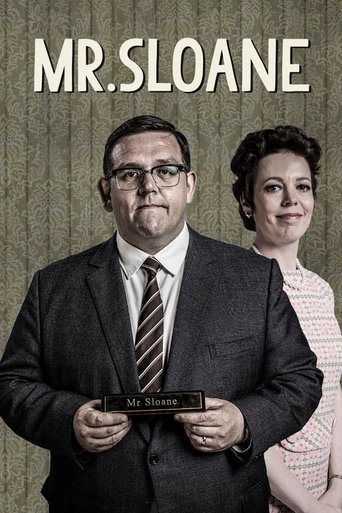
Mr. Sloane
Comedy · Drama
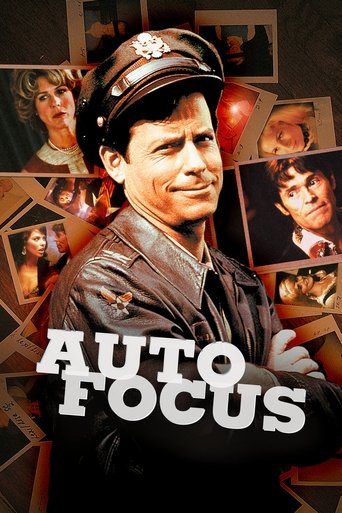
Auto Focus
Crime · Drama

Asoke's Shadow
Drama
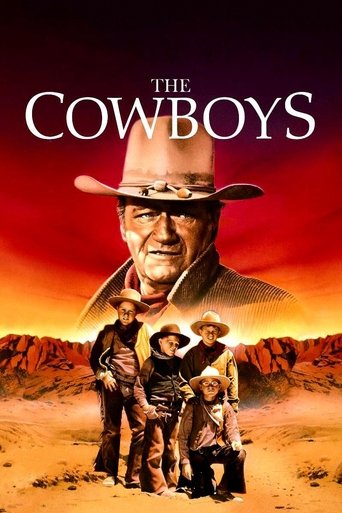
The Cowboys
Action · Adventure
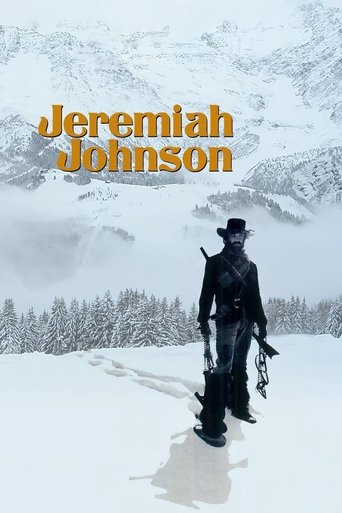
Jeremiah Johnson
Action · Adventure

Lost on a Mountain in Maine
Adventure · Drama
Rebuilding
Drama

American Outlaws
Action · Western
Stand by Me
Crime · Drama