Age-restricted? YouTube often blocks those trailers inside other sites. Use the button to watch on YouTube — you may need to sign in and confirm your age.
Watch on YouTubeTrailer from TMDb metadata; playback via YouTube. If the player shows a restriction, use "Watch on YouTube" above.
Community reviews
From TMDb members · 1 total- Stephen Campbell7/10
**_A strong adaptation marred by a poor central performance_** > _The Lear of Shakespeare cannot be acted. The contemptible machinery by which they mimic the storm which he goes out in, is not more inadequate to represent the horrors of the real elements, than any actor can b…
Full text & links on TMDb in the reviews section below.
Rent, buy & download
Official stores and apps (Apple TV, Prime Video, Google Play, and others) let you rent or buy this title; many include offline downloads inside their app after purchase.
Subscription streaming
 Amazon Prime Video
Showing availability for region US. Opens The Movie Database / partner listings — not affiliated withWatchMind.
King Lear
61%
Movie
1h 55m
AI Analysis
King Lear (2018) — AI movie analysis
WatchMind AI generated this AI analysis of King Lear (2018) — a movie tagged as Drama and TV Movie with emotional moods and steady pacing.
Story & themes: An aging King invites disaster, when he abdicates to his corrupt, toadying daughters, and rejects his loving and honest one. Our models also surface themes such as identity, conflict, and relationships from synopsis and genre signals.
Watch context: Best suited for general audiences. Expect steady storytelling (~115 min).
Community signal: TMDb members rate King Lear 61% (104 votes) — solid community ratings for this movie.
AI verdict
Use this AI analysis as a quick read on King Lear before you watch — trailer, TMDb reviews, and licensed streaming links on this page help you decide.
Algorithmic AI analysis from genres, synopsis, pacing heuristics, and TMDb community scores — not a generative chatbot. How WatchMind works.
Insights
Audience & engagement
How WatchMind visitors interact with this title — views, saves, sentiment, and taste match when you're signed in, or a device preview while browsing. Aggregates are anonymous; last 30 days.
Early data — charts fill in as more people explore this title.
TMDb audience score
61%
from 104 TMDb votes
Your taste match
Browse a few titles or complete the vibe check — we'll show your match % here.
- Your rating—
- Watch queueNot saved
WatchMind sentiment
No thumbs or dismissals yet. Rate this title to help others see likeness trends.
- Dismissals
- 0
Engagement breakdown
0 unique visitors · no audience notes yet
Views trend (14 days)
Daily title page views on WatchMind
Synopsis
An aging King invites disaster, when he abdicates to his corrupt, toadying daughters, and rejects his loving and honest one.
Quick facts
- Type
- Movie
- Status
- Released
- Release date
- 2018-05-28
- Runtime
- 1h 55m
- TMDB rating
- 6.1
- TMDB ID
- 513427
Watch & discovery tips
- Read TMDb member reviews in the reviews section, and audience tips from other WatchMind visitors in Audience notes.
- Use Rent, buy & download for official stores; offline viewing is usually inside their apps.
- Browse trending and top-rated movies from the main Movies page.
- Add titles to your watch queue from this page — order matters; the top pick can surface on your home page when you're logged into the same browser session.
Frequently asked questions
Where can I watch King Lear (2018)?
King Lear is available for discovery on WatchMind. You can find official links to rent, buy, or stream from licensed digital stores like Apple TV and Amazon in our "Where to Watch" section.
Is there an official trailer for King Lear?
Yes, you can watch the official trailer for King Lear directly on this page. We pull the latest video metadata from TMDb and play it via YouTube integration.
What is King Lear about?
An aging King invites disaster, when he abdicates to his corrupt, toadying daughters, and rejects his loving and honest one.
Is there an AI analysis for King Lear?
Yes. WatchMind publishes an AI analysis on this page — tone, pacing, audience fit, and community scores from TMDb metadata and recommendation models (not a chatbot). Scroll to the AI Analysis section or read the meta description summary.
How long is the movie King Lear?
The official runtime for King Lear is approximately 115 minutes.
Cast & crew
Names and photos from The Movie Database (TMDb). Follow links on themoviedb.org for full filmographies.
Directors & writers
Cast
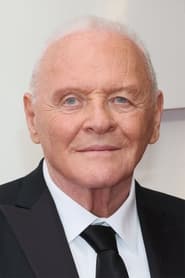
Anthony Hopkins
Lear

Emma Thompson
Goneril

Emily Watson
Regan
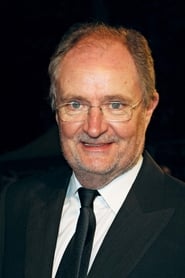
Jim Broadbent
Earl of Gloucester

Florence Pugh
Cordelia

Jim Carter
Earl of Kent

Andrew Scott
Edgar
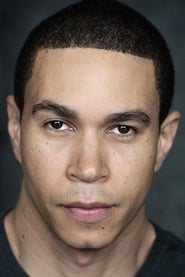
John Macmillan
Edmund

Tobias Menzies
Duke of Cornwall

Anthony Calf
Duke of Albany

Karl Johnson
Fool
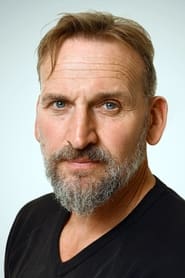
Christopher Eccleston
Oswald

John Standing
Butler

Simon Manyonda
Duke of Burgundy

Chukwudi Iwuji
King of France

Samuel Valentine
Lear's Gentleman
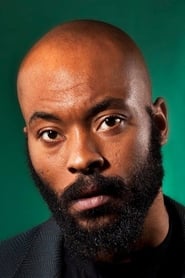
Arinzé Kene
Lieutenant
- S
Sharon Wattis
1st Maid
Audience notes
Quick tips, watch-order ideas, and “worth it?” takes from other WatchMind visitors — not from TMDb. Reply to continue a thread, tap Helpful to surface useful notes, and keep things kind — no spoilers in the first line when you can help it.
Discussion0 notes
No notes yet — be the first to leave a suggestion for the next viewer.
Community reviews
Written by TMDb members — same catalogue as our movie & TV metadata. API terms
**_A strong adaptation marred by a poor central performance_** > _The Lear of Shakespeare cannot be acted. The contemptible machinery by which they mimic the storm which he goes out in, is not more inadequate to represent the horrors of the real elements, than any actor can be to represent Lear: they might more easily propose to personate the Satan of Milton upon a stage, or one of Michael Angelo's terrible figures. The greatness of Lear is not in corporal dimension, but in intellectual: the explosions of his passion are terrible as a volcano: they are storms turning up and disclosing to t__he bottom that sea, his mind, with all its vast riches. It is his mind which is laid bare. This case of flesh and blood seems too insignificant to be thought on; even as he himself neglects it. On the stage we see nothing but corporal infirmities and weakness, the impotence of rage; while we read it, we see not Lear, but we are Lear, we are in his mind, we are sustained by a grandeur which baffles the malice of daughters and storms._ - Charles Lamb; "On the Tragedies of Shakespeare Considered with Reference to their Fitness for Stage Representation". Originally published in _The Reflector_, Volume II, Number 4 (Winter, 1811), as "Theatralia, No. 1 - On Garrick, and Acting; and the Plays of Shakspeare, considered with reference to their fitness for Stage Representation", signed "X" The thing about seeing a performance of a part in a play or literary adaptation (or really any acting role) that one comes to regard as "definitive", is that such a performance will have a detrimental effect on one's ability to objectively judge any subsequent performance of that part, as any such performance will necessarily be found wanting. Antony Sher as Richard III in Bill Alexander's 1984 RSC production, Kenneth Branagh as Henry V in his own 1989 film, Harris Yulin as Willy Loman in David Esbjornson's 2010 Gate Theatre production of _Death of a Salesman_, Gillian Anderson as Blanche DuBois in Benedict Andrews's 2014 Young Vic production of _A Streetcar Named Desire_, even something like Christopher Lee as Dracula or Marlon Brando as Kurtz in Francis Ford Coppola's _Apocalypse Now_ (1978). All definitive. For me, the definitive Lear is a no brainer - Owen Roe in Selina Cartmell's magisterial 2013 Abbey Theatre production. Roe was very much helped by the extraordinarily ambitious direction of Cartmell (current artistic director of the Gate Theatre). However, irrespective of directorial assistance, the scenes on the heath, were unlike anything I've ever seen, as Roe alternates, sentence by sentence (!) between a fairly standard (if brilliantly staged) raging at the heavens, and turning directly to the audience and speaking quietly and calmly, almost emotionlessly. Sentence. By. Sentence. Without breaking the metre of the iambic pentameter verse!! Of course, Cartmell's choice here is obvious; the use of two different styles of delivery serve as a succinct visual/aural metaphor for the inner turmoil of the character, but although it's a thematically simple enough device, it requires a performance of immense control to bring it off. And then we have Anthony Hopkins in writer/director Richard Eyre's (_Iris_; _Notes on a Scandal_; _The Children Act_) TV adaptation for the BBC. Oh dear. His performance was never going to touch Roe's masterclass for me, but what's especially disappointing is how little interested he seems in doing anything beyond giving the barest essentials in his interpretation of the part. Having said that, that Hopkins would appear in any filmic adaptation of _King Lear_ at all is unexpected. He has played the part before – over one-hundred performances in David Hare's 1986 National Theatre production; a run which was almost immediately followed by over one-hundred performances in Peter Hall's 1987 production of _Antony and Cleopatra_. Hopkins had been growing disillusioned with theatre acting for some time, and his success in films such as David Lynch's _The Elephant Man_ (1980) and Roger Donaldson's _The Bounty_ (1984) served only to expedite his growing dissatisfaction. Disliking the experience of performing Shakespeare over two-hundred times in the course of two years, and feeling burnt out (who can blame him), after Antony finished its run, Hopkins moved to the US to pursue film acting full time. He has often spoken since about just how much he hated those two years, and how much he grew to loathe Shakespeare, particularly Lear. On his commentary track for _Titus_ (1999), he points out that as far as he was concerned, he was done with Shakespeare, until director Julie Taymor convinced him to appear in the film adaptation of her own 1994 Theatre for a New Audience production. He also stresses that Titus will most likely be the last time in his life he plays Shakespeare (calling the performance his "_swan song_"). Obviously, he changed his mind (or Eyre changed it for him), but that he would do so with Lear, of all plays, is decidedly unexpected. So with all of that in mind, what exactly is wrong with his performance? How can someone who played the part over one-hundred times possibly give an under par performance? Well, probably because he played the role over one-hundred times. The performance is lethargic, jaded, lazy, as if it's routine, become so familiar that all meaning has evaporated from the text (similar to when you say a word over and over and it starts to sound strange). Hopkins plays Lear as an easy-to-anger man, used to getting his own way, with little time for sentiment, whose grip on reality is becoming increasingly tenuous. Nothing wrong with that - it's a very basic reading of the character, but still nothing inherently wrong with it. The problem is, we've seen Hopkins play this character before, or a variation thereof, in everything from Edward Zwick's _Legends of the Fall_ (1994) to Oliver Stone's _Nixon_ (1995) to Joe Johnson's _The Wolfman_ (2010). Indeed, his performances in Eyre's Lear is, beat for beat, a virtual carbon copy of his performance in Taymor's _Titus_. There are many similarities between the characters, to be sure, but not so many that the parts should be played in exactly the same way (as a contrast, look at Brian Cox's performance in the two roles; Titus in Deborah Warner's ground-breaking 1987 RSC production, and Lear in Warner's 1990 National Theatre production – three years, and an ocean of interpretive difference separate the performances). Hopkins's performance has two gears – scenery chewing and shouty scenery chewing. That's it. Compare the lack of pathos, emotion, or nuance in his performance to, for example, Cox, Paul Scofield (in Peter Brook's 1971 film), Jüri Järvet (in Grigori Kozintsev's 1971 film), Laurence Olivier (in Michael Elliott's 1983 TV movie for ITV), or Anthony Sher (in Gregory Doran's 2018 RSC production). All of them show more range, and a wider and more complete understanding of the text than Hopkins's one note performance. Also, his tendency to pause in the middle of verse lines is extremely distracting, and completely disrupts the meter. Such pauses serve to create artificial caesuras in the iambic pentameter lines, turning the verse into a bizarre amalgamation of anapaestic and dactylic hexameters, and even heptameters. A stronger director would have stamped this out, or had the actor speak in prose (as a few of the other actors do), but to have the actor speak in verse, but show no respect for the verse is...strange. Thankfully the rest of the cast are universally strong. And what a cast! Emma Thompson as an especially nasty Goneril; Jim Broadbent as a deeply sympathetic Gloucester; John MacMillan as a soft-spoken Edmund; Andrew Scott as a highly emotional Edgar; Jim Carter as a gruff Kent; soon-to-be-superstar Florence Pugh as a very young and wide-eyed Cordelia; Karl Johnson as a decidedly serious Fool; Christopher Eccleston as a suitably ridiculous Oswald; Anthony Calf as a take-charge Albany; and Chukwudi Iwuji as a considerate France. However, the film is stolen by the work of Emily Watson and Tobias Menzies as an insanely bloodthirsty Regan and Cornwall. Watson's Regan oozes raw sexuality, and the (very graphic) blinding scene clearly turns both of them on. Two terrific performances which left me wishing there was more of them together in the play. Also impressive is Eyre's direction, although the lack of editing rhythm in the opening scene is a little strange, and the shot composition in places tends to flatten the image, making it seem a little like a filmed play. His decision to set the play in modern London, however, with Lear as a retiring pseudo-dictator, works very well (Edgar is an astrophysicist, Edmund is in the armed forces). In this context, the shopping mall scene is especially well conceived and executed, as a now quite mad Lear wanders around a near-derelict shopping mall in a bad part of town, dressed like a vagrant, pushing a shopping trolley, and talking to a doll. It's a deeply unsettling image that encapsulates perfectly just how far he has fallen. Also well conceived is the scene set in an asylum seekers' refugee camp. The political commentary is a little on the nose, as Lear looks around the camp at the faces of the refugees, forcing him to consider issues of which he's never before conceived, but it's effective, timely and non-intrusive. So, all-in-all, a strong adaptation with an excellent cast brought down only by a weak central performance. Unfortunately, the part of Lear is so completely central, pivotal, and dominating, that if it doesn't work, there's a problem. Hopkins's performance isn't so bad as to distract too much from the excellent work done elsewhere in the piece, but what's annoying about it is it could easily have been so much better. Mind you, members of the cast have been active on Twitter and the interview circuit for the last couple of weeks talking about how much they loved working with Hopkins, and how tremendous they think he is in the role (oftentimes, going to the set even when they weren't working, just to watch him filming). So, what the hell do I know?

More to explore
Hand-picked from TMDb similar and recommended lists for King Lear. Each link opens a full WatchMind page with synopsis, trailer, community reviews, and official store links—so you can compare tone and audience overlap before you pick what to watch next.